
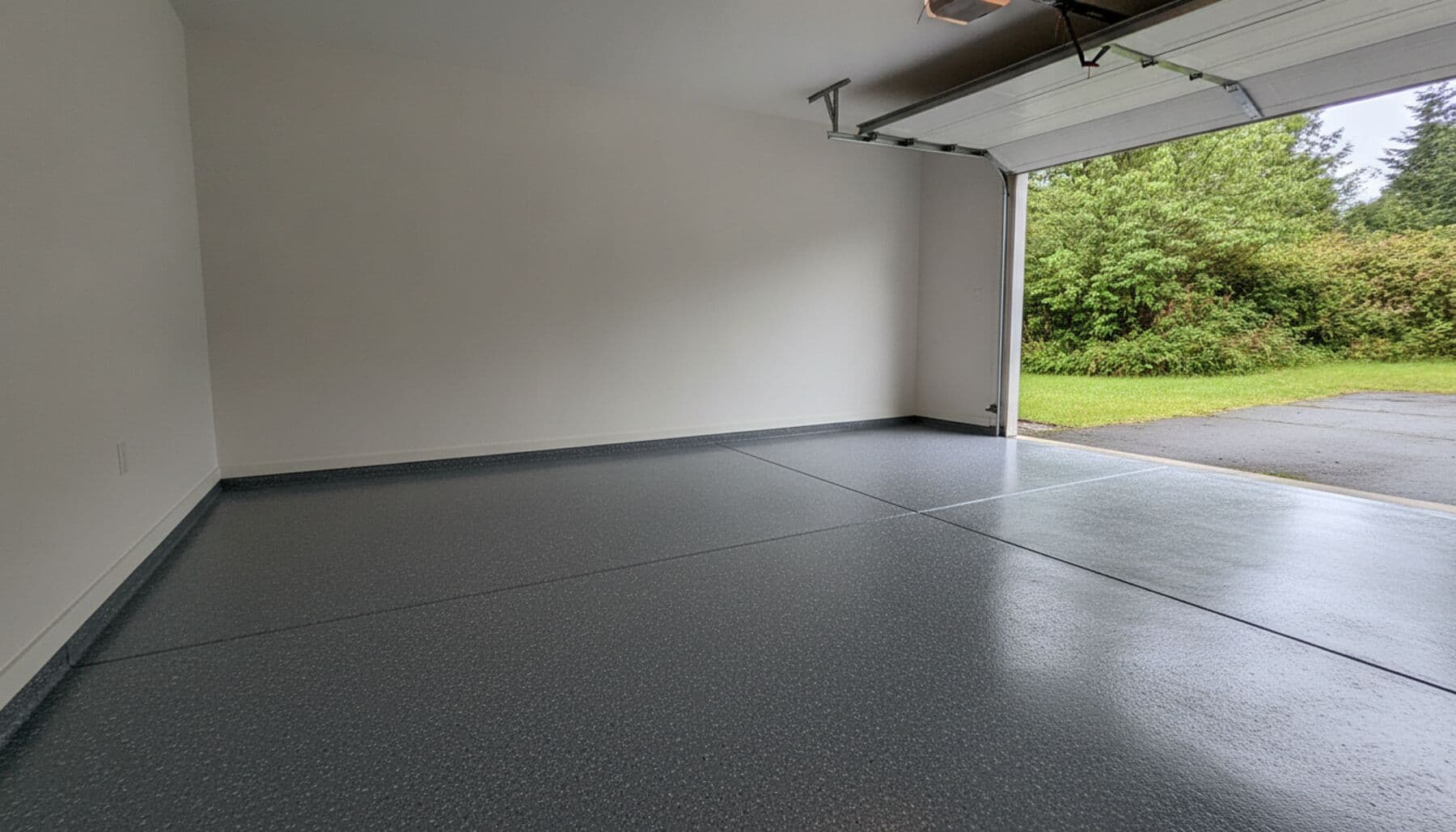
Polyaspartic is an aliphatic polyurea: a fast-curing, colour-stable coating that takes foot traffic in about four hours where a comparable epoxy needs twelve. It is harder wearing and it does not yellow. It is also a topcoat, not a whole floor, and its cold-weather reputation is largely wrong.
What polyaspartic actually is
It is not a type of epoxy and it is not a marketing name for one. Polyaspartic coatings are made by reacting an aliphatic polyisocyanate with a polyaspartic ester, and Covestro, which developed the chemistry, groups these systems under the Desmophen NH aspartic resins. The reaction product is a polyurea. That is why the search term "polyaspartic aliphatic polyurea" turns up: the three words describe the same material.
The word that carries the weight is aliphatic. Aliphatic resins hold their colour under ultraviolet light. Epoxy does not, which is the single most important difference between the two products and the reason almost nobody specifies bare epoxy as the wear layer any more.
Polyaspartic vs epoxy, straight off the data sheets
Below is a like-for-like comparison assembled from published manufacturer data. The first two columns are the same company's own sheets, in the same format, tested at the same conditions, so the numbers are genuinely comparable rather than cherry-picked across brands. Values are the published figures at 68 °F (20 °C) unless noted.
| Epoxy (Sikafloor-264) | Polyaspartic (Sikafloor-510 LPL) | Polyaspartic cross-check (Neogard 70869) | |
|---|---|---|---|
| Foot traffic | ~12 hours | 4 hours | Return to service in 11 hours |
| Light traffic | ~2 days | ~8 hours | not published |
| Full cure | ~7 days | ~5 days | not published |
| Recoat window | 8 to 24 hours | 90 minutes to 24 hours | not published |
| Pot life | ~25 minutes | ~30 minutes | 20 to 25 minutes at 75 °F |
| Taber abrasion, CS-17, 1,000 cycles, 1,000 g (ASTM D4060) | 90 mg loss | ~50 mg loss | 55 mg loss |
| Min. ambient and substrate temp. | 50 °F (10 °C) | 50 °F (10 °C) | 50 °F (10 °C) |
| UV | "Will discolor over time when exposed to sunlight" | UV resistant | Resists UV |
| Coverage at 12 to 15 mils wet | 105 to 135 sq ft per US gal | 105 to 135 sq ft per US gal | not published |
Sources: Sikafloor-264 PDS, Sikafloor-510 LPL PDS, Neogard 70869/70819 Polyaspartic PDS.
Two things jump out. The abrasion gap is real and large: the polyaspartic loses roughly 45 percent less material under the same Taber test, and a second manufacturer lands in the same band at 55 mg, which is a good sign the figure is a property of the chemistry rather than one lab's good day. And the coverage rates are identical. At the same film build these two products cover the same floor area, so nobody is charging you more because the polyaspartic goes further or less far. The premium is resin cost and labour, not volume.
Does polyaspartic really cure in the cold?
This is where the marketing and the data sheets part company. Polyaspartic is widely sold on cold-weather application, and for spray-applied industrial polyurea that reputation is earned. For floor-grade polyaspartic it is not what the sheets say. Sikafloor-510 LPL specifies a minimum ambient and substrate temperature of 50 °F (10 °C), the identical minimum published for the epoxy. Neogard sets the same 10 °C floor. Sika's metric sheet for Sikafloor-530 goes slightly lower at +8 °C. None of them is anywhere near the sub-zero figures the category is known for.
The genuine cold-weather advantage is a different one, and it is better. Sikafloor-530 publishes the same cure times at +8 °C as at +30 °C: three hours to foot traffic, six to full traffic, unchanged across a 22-degree span. The epoxy sheet does the opposite. Drop it from 20 °C to 10 °C and foot traffic goes from roughly 12 hours to 24, light traffic from 2 days to 3, and full cure from 7 days to 10. So polyaspartic does not let you coat a colder floor. It stops the cold from stretching the schedule once you are inside the window.
That matters here. Environment and Climate Change Canada's published climate normals for Victoria International Airport put the January mean daily maximum at 7.59 °C, with only 6.62 days in an average January getting above 10 °C at all, roughly one day in five. Those normals cover 1981 to 2010, which is the most recent set ECCC publishes through that API, so the figure is worth a recency check. Recomputed from the same station's ECCC daily climate records for VICTORIA INTL A for the five Januaries of 2021 to 2025, the mean daily maximum comes out at 7.4 °C across the 152 days carrying a recorded maximum, three days short of the full 155. The old normal has not drifted. Both figures are outdoor air rather than slab temperature, and a slab on grade lags the air instead of tracking its daily peak. But the direction is unambiguous: an unheated garage on the South Island in January is not sitting at the temperature either data sheet asks for. Heat and dehumidification are not an upsell in a Victoria winter. They are what makes the numbers above apply to your floor instead of to a laboratory.
The UV limitation buried in the epoxy sheet
Everyone knows epoxy ambers. Fewer people know what the manufacturer says about fixing it. Sika's own limitation on Sikafloor-264 reads: "Will discolor over time when exposed to sunlight (UV) and under certain artificial lighting conditions. Use of clear UV resistant top coat may not prevent discoloration of underlying coatings."
Read that second sentence twice. The standard industry answer to epoxy yellowing is a UV-stable topcoat over it, and the epoxy's own manufacturer will not promise that stops the epoxy beneath from changing colour. It is not a reason to avoid the build coat. It is a reason to be sceptical of anyone selling you a clear polyaspartic finish as a guarantee against ambering on a floor with a south-facing door that spends summer open. If long-term colour is the priority in that bay, the pigment belongs in the wear layer, not under it.
Pot life is the real constraint, and the sheets disagree
Polyaspartic's reputation for a punishing working time is only half right, and manufacturers do not agree with each other. Sikafloor-510 LPL publishes about 40 minutes at 10 °C, 30 at 20 °C and 20 at 30 °C. Sikafloor-530, from the same company, publishes a flat 20 minutes at all three temperatures. Neogard sits at 20 to 25 minutes. Sika also warns that adding its urethane pigment packs shortens the working time of the 510.
The practical consequence is the same either way. Twenty to thirty minutes is not long enough to work a double garage alone, and unlike epoxy the clock does not reliably slow down when the floor is cold. This is a two-person product on anything larger than a single bay, and a crew that has to stop mid-floor leaves a lap line that does not sand out. When you compare quotes, ask how many people are on the tools and which product data sheet governs the install. Two polyaspartics from one manufacturer differ by a factor of two here.
What it costs, and what actually moves the number
Polyaspartic costs more per litre than epoxy. It does not cover less, as the table shows, so the premium is material price plus the crew and conditioning the pot life demands. What moves your total far more than the product choice is the slab: the moisture reading, the grind, the crack routing, and whether the garage needs heating to get inside the application window in February. Two floors of identical size can differ by thousands on preparation alone, which is why we quote after a site assessment rather than by square footage over the phone.
So which one goes on your floor
For most Greater Victoria garages, both. A pigmented epoxy build coat carries the film thickness and the flake, and a polyaspartic wear layer carries the abrasion and the sunlight. Sherwin-Williams describes polyaspartic curing as fast as two hours per coat, which is what makes a same-day walk-on, next-day drive-on system possible when the schedule is the constraint and a full polyaspartic build is worth its price.
None of it survives bad preparation. A polyaspartic system over an acid-etched slab will fail sooner than a modest epoxy over a properly ground one. Read the moisture test and why coatings peel before you sign anything, see the full sequence on our garage floor epoxy page, and book a site assessment so the system gets specified against your slab and not against an average one.