
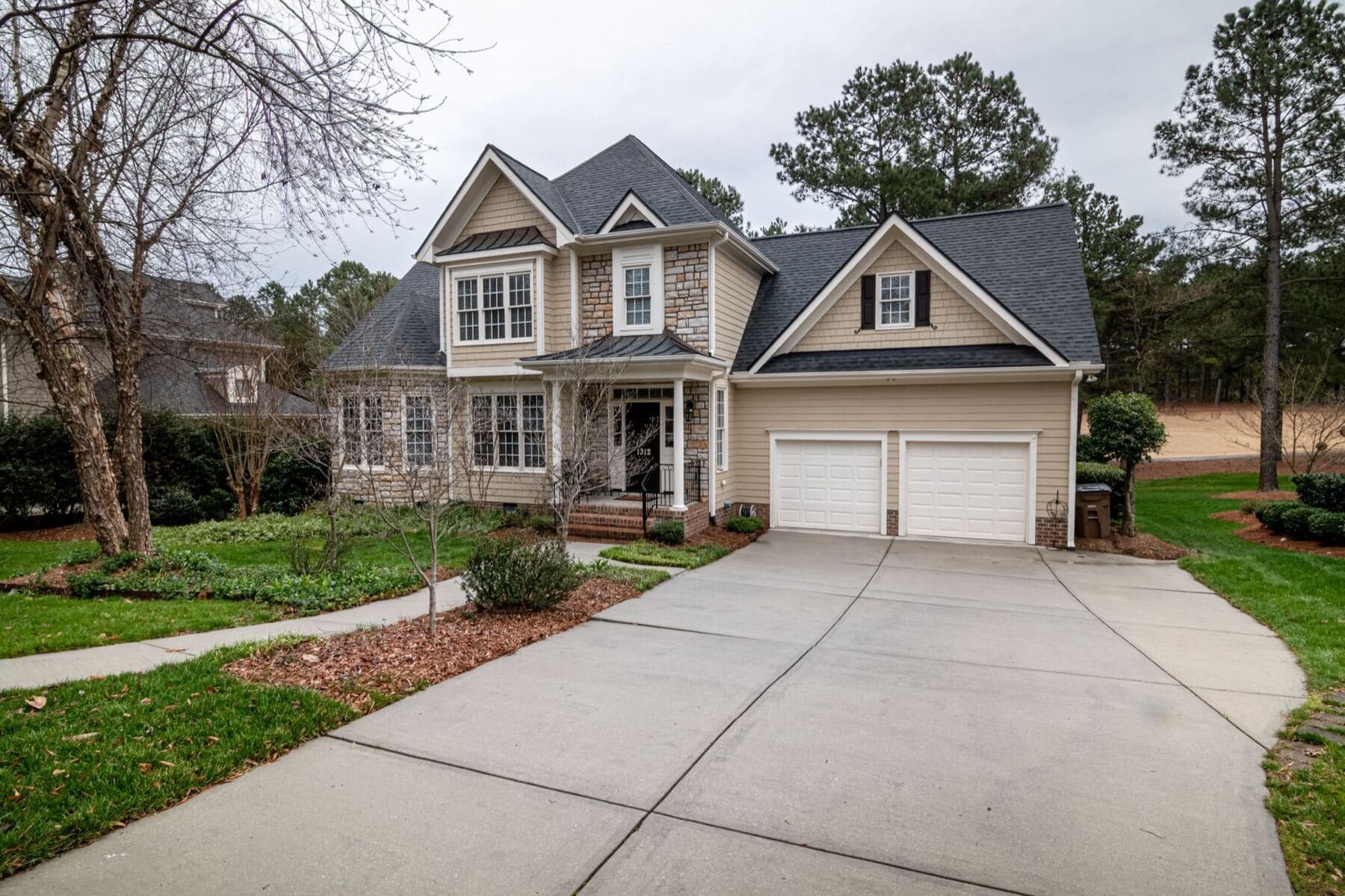
If your driveway looks grey and thirsty or your patio goes green every winter, a sealer can help. It slows water and water-carried salt from soaking into bare concrete, but it won't repair a surface that's already flaking or cracked. Penetrating sealers soak in and leave no film, while film-forming sealers leave a coat on top that can be slippery when wet. Both need a clean, dry slab and mild temperatures, so in Victoria's wet season the job usually waits for a dry spell or for spring.
What does a concrete sealer actually do, and what can't it do?
On bare outdoor concrete, a sealer's main job is keeping water out. PROSOCO's data sheet for Saltguard WB, a water-based silane/siloxane product for driveways and sidewalks, says it protects surfaces "from moisture intrusion and chemical attack of chloride salts" (PROSOCO Saltguard WB data sheet). The same sheet says it "will not prevent water penetration through structural cracks, defects or open joints." Film-forming sealers have their own limit on flat ground, and Behr's acrylic Wet-Look Sealer sheet notes that "horizontal surfaces may be subject to excessive wear and periodic touch-ups may be necessary" (Behr Wet-Look Sealer No. 985 data sheet). So a sealer is upkeep for sound concrete, and it won't fix damage.
Penetrating or film-forming: what's the difference?
Silane and siloxane water repellents are a penetrating type. PROSOCO says Saltguard WB "penetrates and chemically bonds deep within the concrete," leaves "no surface film" when properly applied, and keeps the slab's "natural appearance." Silicates are a different penetrating product. PROSOCO's Consolideck LS is a "premium hardener, densifier and sealer" that reacts "with the concrete to produce insoluble calcium silicate hydrate within the concrete pores" (PROSOCO Consolideck LS data sheet).
Film-forming sealers sit on top. Behr's Wet-Look Sealer is "acrylic-based" with "a high gloss, wet-look finish," and it lists concrete aggregate among its surfaces, so it can go on an older exposed-aggregate driveway. The sheet warns that "sealed surfaces may become slippery when wet" and to use caution "when moisture is present."
The two types don't always mix. Saltguard WB is "not suitable for application to coated surfaces or surfaces previously treated with water repellents or liquid hardeners," and Behr wants old sealers removed first, so find out what's on the slab before you buy.
Why is a Victoria winter the wrong time to seal?
Behr asks for air, material and surface temperatures between 50 °F and 80 °F (10 °C and 27 °C), and says not to apply "on wet surfaces or if rain/heavy dew is expected in 24 hours." PROSOCO says Saltguard WB's "best performance is achieved on clean, visibly dry and absorbent surfaces." Surface and air temperatures "must be at least" 40 °F (4 °C) "during application and for 8 hours following," and rain must be kept off for at least 6 hours.
Environment and Climate Change Canada's 1981 to 2010 normals for Victoria International Airport show the problem (ECCC climate normals, Victoria Int'l A). About 694 mm of the station's 883 mm of yearly precipitation falls from October to March. November averages 19 days with measurable precipitation, against about 5 in July. Mean daily highs from November through February run from 7.0 °C to 9.7 °C, below Behr's minimum, and mean lows sit between 1.1 °C and 3.0 °C, under PROSOCO's 4 °C.
The National Ready Mixed Concrete Association agrees that "the concrete should be reasonably dry prior to the application of a sealer" and that "late summer is the ideal time for surface treatment" (NRMCA CIP 2, Scaling Concrete Surfaces). The moisture test post covers how to check whether the slab itself is dry.
Does Victoria get enough frost and road salt to matter?
It gets some. The same normals record about 46 nights a year at or below 0 °C, mostly from December to February, but only about 2 days when the high stays at or below freezing, and around 40 cm of snow a year.
NRMCA defines scaling as "local flaking or peeling of a finished surface of hardened concrete as a result of exposure to freezing and thawing," and says slabs "exposed to freezing and thawing in the presence of moisture and/or deicing salts are susceptible to scaling." NRMCA's advice is to skip calcium or sodium chloride de-icers "in the first year after placing the concrete," use salt sparingly after that, and "never use ammonium sulfate or ammonium nitrate as a deicer." For newly placed concrete, it also recommends a "silane or siloxane-based breathable concrete sealer" before freeze and thaw cycles. PROSOCO lists "effective protection against de-icing salts and salt air" for Saltguard WB, useful to know near the water in Oak Bay, Esquimalt or Sidney.
What about moss on a shaded driveway or patio?
A shaded slab, including one that faces north or sits under trees, is the one most likely to go green. Washington's Thurston County Stream Team says moss "loves overcast skies, wet winters" in the Pacific Northwest, "thrives in damp, full-shade" conditions, and that "on driveways and walkways, moss can be very slippery" (Stream Team, Creature Feature: Moss). ECCC puts Victoria's December at about 59 hours of bright sunshine, against about 318 in July.
Clean the slab before sealing. Behr wants concrete clear of "mold and mildew stains," and PROSOCO says contaminants and old sealers "may interfere" with penetration. The Capital Regional District's power washing sheet says to sweep first, protect storm drains, and collect wash water with cleaning products for the sanitary sewer (CRD, Power Washing Without Pollution).
If you're unsure whether your slab is ready for a sealer, or what's on it, describe it in the form with your town, the rough size and what the surface is doing now, such as moss, flaking or dark patches that stay wet.
How long should new concrete cure before it's sealed?
Check the sheet for the product you plan to use. Behr says to "allow new surfaces to cure 30 days" before its Wet-Look Sealer. PROSOCO lists Saltguard WB as "suitable for new 'green' concrete, 14–28 days old." Both say to remove curing compounds first.
Is an "eco-friendly" or low-VOC sealer really different?
In Canada, every concrete sealer already has a VOC limit. The federal VOC Concentration Limits for Architectural Coatings Regulations (SOR/2009-264) cover products "applied onto or impregnated into a substrate" for surfaces including "driveways, parking lots, sidewalks" (SOR/2009-264, Justice Laws). The schedule caps a "film-forming" waterproofing sealer for concrete or masonry at 400 g/L and "any other waterproofing sealer" at 250 g/L. "Eco-friendly" isn't one of its categories, so the number to compare is the VOC content on the data sheet. Behr lists "< 100 g/L," Saltguard WB "<25 g/L," and Consolideck LS "0 g/L."
When does a slab need resurfacing instead of a sealer?
A slab needs resurfacing when the surface itself is failing. NRMCA says moderate scaling exposes the aggregate and can take "up to 1/8 to 3/8 inch [3 to 10 mm] of the surface mortar," and that a repair "will only be as strong as the base surface to which it is bonded." Flaking, aggregate standing proud, and structural cracks or open joints point to concrete resurfacing rather than a sealer. See also concrete patio repair and resurfacing and resurfacing vs replacing a driveway. Asphalt is covered on the driveway sealcoating page, and garage interiors on the garage floor epoxy page.
What changes the cost of sealing a driveway or patio?
Size matters, but both data sheets tie coverage to how porous the surface is, so a rough, open surface can take more product than a dense one. Moss or oil to clean off, an old sealer to strip, the sealer type, the number of coats and any repairs all change the price.
If you're weighing a sealer against resurfacing, use the form to describe the driveway, patio or walkway, with your town, the rough size and what the surface is doing now. If it isn't clearly one of the listed services, "What needs doing" has a "Not sure yet" option.